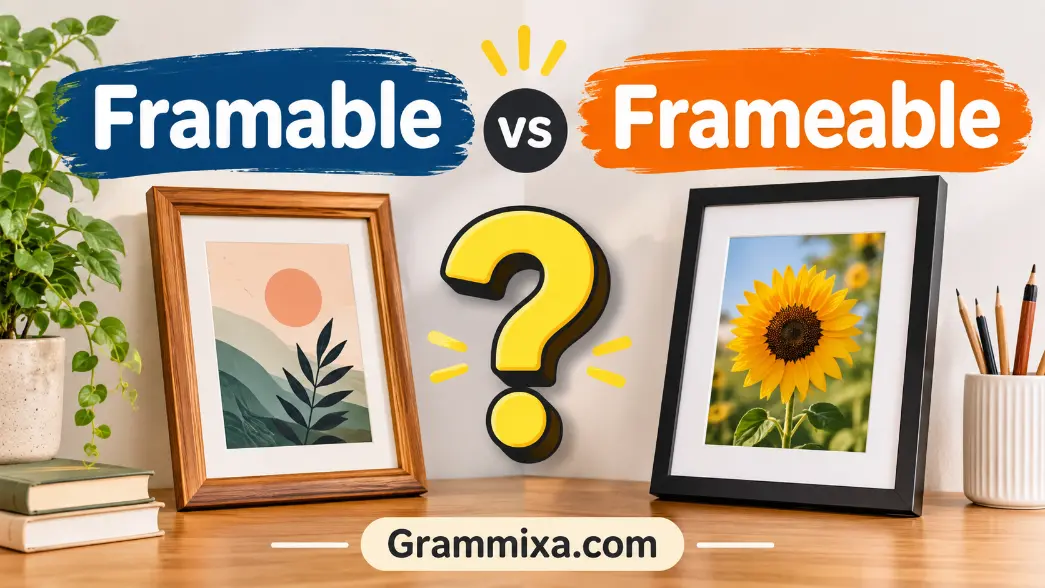
Choosing between framable vs frameable can be confusing because both spellings look correct at first glance. If you are writing a product description, preparing an art listing, or explaining whether a photograph or print can be placed inside a frame, you may wonder which spelling you should use. The good news is that the difference is simpler than it seems.
Both framable and frameable are used to describe something that can be framed. However, frameable is the more widely recognized spelling in standard English dictionaries and everyday writing. Framable is a shorter variant that follows a common spelling pattern in which the silent final e is dropped before adding a suffix. This pattern appears in other English words, which helps explain why both forms exist.
So, which spelling should you choose? The answer depends partly on your audience, writing style, and the dictionary or style guide you follow. For most general writing, product descriptions, and professional communication, frameable is a clear and familiar choice.
In this guide, you will discover the meanings of framable and frameable, learn how their spellings differ, and explore practical examples of each word in context. You will also find out which form is best for everyday use so you can write with greater confidence and avoid unnecessary spelling confusion.
Frameable is the more widely recognized spelling of the adjective meaning suitable for framing. It describes a photograph, certificate, artwork, or document that can be placed in a frame. Framable is a possible alternative spelling formed by dropping the silent e before adding -able, but frameable is the clearer choice for most everyday and professional writing.
Framable vs Frameable: Quick Answer
Both framable and frameable are accepted English spellings of an adjective meaning suitable for framing. The difference is spelling, not meaning. Framable follows the pattern of dropping the silent e from frame before adding -able, while frameable retains the original e. Both forms appear in dictionaries and published writing, so the best choice depends on your preferred dictionary or style guide.
| Word | Meaning | Usage |
|---|---|---|
| Framable | Suitable for framing | An accepted spelling, often preferred by some usage authorities |
| Frameable | Suitable for framing | An accepted alternative spelling, common in published writing |
If you are writing for a publication, follow its spelling guidelines. If no specific style guide applies, choose one form and use it consistently.
What Does Framable Mean?
Framable is an adjective that describes something suitable for being placed in a frame or enclosed within one.
The word comes from the verb frame, which can mean to place a picture inside a border or supporting structure. Adding the suffix -able expresses the idea that something can undergo that action or is suitable for it.
Framable in Everyday Language
The word usually describes physical objects such as photographs, artwork, certificates, posters, and printed designs.
Consider these examples:
- The photographer gave us a framable portrait of our family.
- This certificate is framable and would look great in my office.
- She selected a framable print for the living room.
- The artist sells framable illustrations in several sizes.
In each sentence, framable means that the item is suitable for placing in a frame.
Framable in a Broader Context
The word can also describe something that can be presented or interpreted within a particular framework.
For example:
- The story is framable as a tale about personal growth.
- The historical event is framable within a broader political context.
This broader meaning is less common in everyday conversation than the meaning related to pictures and artwork. It is useful in academic, literary, and analytical writing.
What Does Frameable Mean?
Frameable has the same basic meaning as framable. It describes an object or item that is suitable for framing.
The spelling retains the final e from the word frame before adding -able.
Frameable in Everyday Language
Here are some natural examples:
- This photograph is frameable and would make a thoughtful gift.
- The museum shop sells frameable prints of famous paintings.
- I found a frameable version of my favorite illustration.
- Her graduation certificate is frameable and ready for display.
These sentences communicate the same ideas as their versions using framable.
Frameable in Figurative Language
In some contexts, frameable means that an idea, event, or story can be interpreted or presented in a particular way.
For example:
- The novel is frameable as a critique of modern society.
- The debate is frameable as a conflict between tradition and change.
The intended meaning depends on context. When discussing pictures, the word generally refers to physical framing. When discussing arguments or narratives, it can refer to the way information is organized or interpreted.
Why Are There Two Spellings?
The difference comes from how English handles the final silent e when adding suffixes.
The base word is frame. When the suffix -able is added, writers may retain or drop the final e, producing two recognized forms.
The Spelling Pattern
English does not apply one universal rule to every word ending in a silent e. Some words drop the e before a suffix, while others retain it.
| Base word | Derived word | Pattern |
|---|---|---|
| Love | Lovable | Final e dropped |
| Move | Moveable | Final e retained |
| Use | Usable | Final e dropped |
| Change | Changeable | Final e retained |
| Frame | Framable | Final e dropped |
| Frame | Frameable | Final e retained |
These examples illustrate why spelling variations can occur. The accepted form depends on established usage and the word in question, not simply on a rule that applies without exceptions.
Is One Spelling More Correct?
Neither spelling should automatically be treated as incorrect.
Some usage authorities prefer framable, while dictionaries and published writing also recognize frameable. Garner’s Modern English Usage, for example, recommends framable. Other dictionary resources list both forms.
The practical lesson is to avoid treating the extra e as a spelling mistake in every context. Both spellings are established, although individual editors may prefer one over the other.
Framable vs Frameable: Key Differences
The two words do not have a meaningful difference in definition. Their distinction is primarily orthographic, meaning it concerns how they are written.
| Feature | Framable | Frameable |
|---|---|---|
| Part of speech | Adjective | Adjective |
| Basic meaning | Suitable for framing | Suitable for framing |
| Base word | Frame | Frame |
| Suffix | -able | -able |
| Spelling approach | Drops the final e | Retains the final e |
| Grammatical function | Describes a noun | Describes a noun |
| Figurative use | Possible | Possible |
For example, both sentences are understandable and convey the same meaning:
- The picture is framable.
- The picture is frameable.
There is no general grammatical rule requiring one form for photographs and the other for certificates. The choice is a matter of spelling preference and editorial consistency.
When Should You Use Framable or Frameable?
Your choice should depend on the audience, publication requirements, and the spelling conventions you follow.
Use Framable When
Choose framable when:
- Your preferred dictionary or style guide recommends it.
- You want to follow an editorial preference that drops the silent e.
- You are revising a document that already uses this spelling consistently.
- Your publication has standardized the word as framable.
For example:
“Our store offers framable prints in a range of sizes.”
Use Frameable When
Choose frameable when:
- Your publication or organization prefers this spelling.
- You are maintaining consistency with existing material that uses the form.
- Your audience is accustomed to seeing the word written with the additional e.
- You are following a dictionary or reference that recognizes this variant.
For example:
“The collection includes frameable artwork for bedrooms and offices.”
What If You Have No Style Guide?
If no style guide specifies a preference, either spelling is reasonable. Pick one and use it consistently throughout your article, website, product descriptions, or other written material.
Consistency helps readers focus on the content instead of wondering whether two spellings indicate different meanings.
Common Misunderstandings About Framable vs Frameable
Several misconceptions can make this spelling comparison more confusing than it needs to be.
Thinking That Frameable Is Always Wrong
The retained e does not automatically make frameable incorrect. The spelling is recognized in English dictionaries and published material.
Assuming the Words Have Different Meanings
There is no standard distinction in which framable refers only to photographs while frameable refers only to artwork. Both forms can describe the same objects.
Believing That Every Word Must Drop the Final E
English spelling has patterns, but those patterns include exceptions and established variants. The treatment of a silent e depends on the particular word and suffix.
Confusing Framing With Framing Someone
The verb frame can have more than one meaning. In legal or informal contexts, to frame someone can mean to make an innocent person appear guilty by presenting false evidence.
That meaning is different from placing artwork in a frame. The adjective framable or frameable may also be used figuratively in certain contexts, so the surrounding sentence determines the intended meaning.
Similar Words and Alternatives
If you want to describe an item that can be displayed or placed in a frame, several alternatives may suit your sentence.
| Word or phrase | Meaning | Example |
|---|---|---|
| Suitable for framing | Appropriate to place in a frame | The certificate is suitable for framing. |
| Ready to frame | Prepared for placement in a frame | The print is ready to frame. |
| Framed | Already placed in a frame | We bought a framed photograph. |
| Displayable | Suitable for display | The artwork is displayable in a gallery. |
| Printable | Capable of being printed | The design is printable at home. |
| Mountable | Suitable for mounting | The poster is mountable on a wall. |
These words are not perfect substitutes in every sentence. For example, framed means the object already has a frame, while framable and frameable describe suitability for framing.
If you want the clearest wording for a general audience, suitable for framing is a straightforward alternative.
FAQs:
Is Framable a Real Word?
Yes. Framable is a recognized English spelling of an adjective meaning suitable for framing. It is listed as an alternative form of frameable in dictionary resources.
Is Frameable Grammatically Correct?
Yes. Frameable is an accepted adjective. It can describe a photograph, poster, certificate, illustration, or other item suitable for framing.
Which Spelling Should I Use in American English?
Both spellings are used in American English. Some usage authorities favor framable, while frameable also appears in dictionaries and published material. Follow your preferred reference or publication style guide.
Do Framable and Frameable Mean the Same Thing?
Yes. In ordinary usage, both mean suitable for framing. Neither spelling has an established exclusive meaning that distinguishes it from the other.
Why Does Framable Drop the E?
The spelling framable follows a common suffix pattern in which the final silent e of a base word is removed before adding -able. The alternative spelling frameable retains that letter.
Can I Use Framable in a Professional Article?
Yes. You can use framable in professional writing, provided it matches your chosen editorial standard. Consistency matters more than switching between the two accepted forms.
Conclsuion:
Framable and frameable are both accepted spellings with the same basic meaning: suitable for framing. The difference is the treatment of the silent e in the base word frame.
Use framable if your preferred dictionary or style guide recommends it, and use frameable if that is the spelling your publication follows. When no specific preference exists, either form is acceptable. The most important rule is to choose one spelling and use it consistently.
