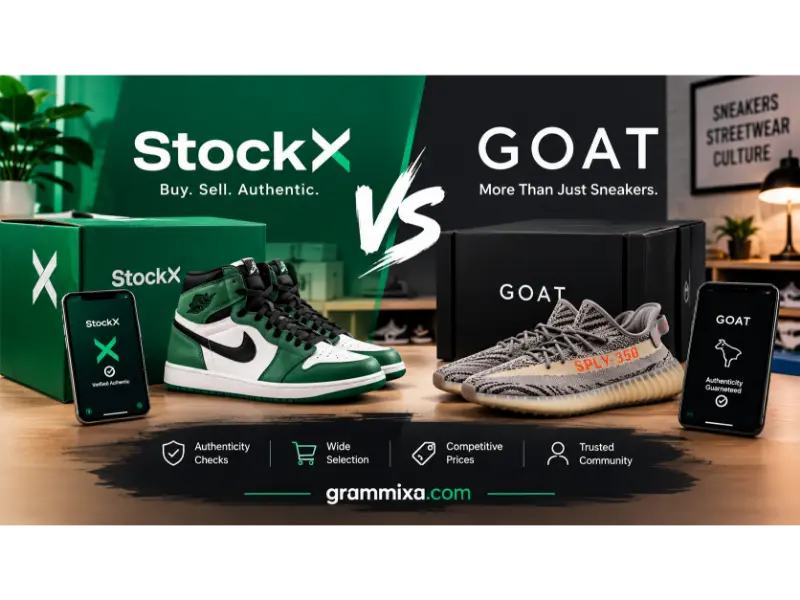
Choosing between StockX vs GOAT can feel tricky when both platforms offer popular sneakers, limited releases, and hard to find styles. Whether you are hunting for the latest Nike Jordans, Adidas trainers, or a pair that sold out months ago, you want to know where to shop with confidence without paying more than necessary.
StockX and GOAT both help buyers find sneakers that may be difficult to purchase through traditional retailers, but they work a little differently. StockX is known for its stock market style pricing, where buyers can place bids and sellers can set asking prices. GOAT offers new and used sneakers, along with other footwear and fashion products, giving shoppers more options depending on the listing.
So, which platform is better for you? The answer depends on what matters most, whether that is price, authenticity checks, shipping costs, delivery times, or the chance to find a specific pair in your size. Fees and availability can also affect the final price, so the cheapest listing is not always the cheapest purchase.
StockX vs GOAT is a comparison between two popular online marketplaces for buying sneakers, streetwear, and collectible footwear. StockX is known for its bid-and-ask marketplace and verification process, while GOAT offers new and used sneakers, product listings, and multiple authentication methods. The better choice depends on the final price, shoe condition, shipping options, return policy, and availability in your country.
StockX vs GOAT: Which Sneaker Marketplace Is Better?
Choosing between StockX and GOAT can be tricky when both platforms list the sneakers you want. One might offer a lower price, while the other has a better size selection or a used pair that fits your budget.
Both marketplaces connect buyers with sellers and use verification measures to help protect customers. However, they differ in how listings work, which products are available, how returns are handled, and what you pay at checkout.
The smartest approach is to compare the exact sneaker, size, condition, and complete order total rather than assuming one marketplace is always cheaper or safer.
What Are StockX and GOAT?
Understanding the two marketplaces
What Is StockX?
StockX is an online marketplace where people buy and sell sneakers, apparel, electronics, collectibles, and other products. It is particularly well known for its stock-market-inspired buying experience.
On its traditional marketplace, buyers can place bids, while sellers set asking prices. A purchase can happen when a buyer and seller agree on a price or when a buyer chooses an available Buy Now listing.
StockX also offers verification for eligible products. Its policies and verification arrangements depend on the marketplace and listing type, so buyers should check the details shown on the product page.
What Is GOAT?
GOAT is an online marketplace specializing in sneakers, clothing, and accessories. It offers new footwear as well as selected used pairs and other products that appeal to sneaker collectors.
GOAT uses several verification methods, including digital authentication, in-hand inspection, and machine-learning technology. Not every item necessarily receives a physical inspection, so its verification process can vary by product and fulfillment method.
GOAT is also useful for shoppers looking for older releases, different shoe conditions, and pairs that may not be available through conventional retail stores.
How Are They Different?
The main distinction is the shopping experience. StockX emphasizes market pricing and bids, while GOAT provides a broader mix of sneaker listings, including used-condition options.
Both platforms have evolved beyond their original offerings. Therefore, buyers should check the actual listing and current checkout terms instead of relying on older descriptions of either service.
StockX vs GOAT: Quick Comparison
| Feature | StockX | GOAT |
|---|---|---|
| Main focus | Sneakers, streetwear, collectibles | Sneakers, apparel, accessories |
| Buying options | Buy Now and bids on eligible listings | Buy Now and offers where available |
| Product condition | New or unworn on the traditional Verified Marketplace; used options on eligible Listings | New and selected used-condition options |
| Verification | Verification process depends on the marketplace and listing | Digital, in-hand, or technology-assisted verification, depending on the item |
| Pricing | Asking prices and market-based bidding | Seller listings and offers where available |
| Returns | Limited by order type, eligibility, and regional rights | Eligible standard returns and buyer protection |
| Shipping | Depends on item, location, and delivery option | Depends on item, location, and delivery option |
| Best starting point | Buyers comparing market prices | Buyers exploring condition and product selection |
Which Platform Wins Overall?
Neither marketplace wins every category. StockX can be attractive when you want to compare market prices or use bids to pursue a target price. GOAT can be more appealing when you want to explore new and used pairs or find a particular release in a specific condition.
Your best choice depends on the item you want, its final price, and the protections available for that particular order.
StockX vs GOAT: Which Is Cheaper?
Price is one of the biggest reasons shoppers compare these platforms. However, the lowest advertised price does not always translate into the cheapest purchase.
The actual cost can include the sneaker price, processing fees, shipping, applicable taxes, and import duties. These charges can vary according to the item and delivery destination.
Compare the Final Checkout Price
StockX buyer fees on its Verified Marketplace are dynamic and can depend on the item’s price, buyer and seller locations, and market conditions. Its Listings Marketplace uses a different fee structure, including a 3% processing fee with a minimum of $3.95 for buyers, plus applicable shipping and taxes. Optional verification may also be available for eligible Listings purchases.
GOAT calculates its order total according to the product, shipping arrangements, location, and applicable taxes or duties. Its published US domestic standard shipping rates, for example, are not universal international rates.
A Simple Price Comparison
Imagine the same sneaker is listed on both platforms.
| Cost factor | StockX | GOAT |
|---|---|---|
| Listed sneaker price | Check the current listing | Check the current listing |
| Buyer fees | Depends on marketplace and order | Depends on the order |
| Shipping | Depends on destination and option | Depends on destination and option |
| Taxes and duties | May apply | May apply |
| Final amount | Confirm at checkout | Confirm at checkout |
For a fair comparison, use the same shoe model, colorway, size, condition, currency, and shipping destination.
Verdict: The cheaper platform is whichever offers the lower final price for the exact pair you want. Neither StockX nor GOAT is consistently cheaper for every sneaker.
StockX vs GOAT: Which Has Better Authentication?
Authenticity matters when buying expensive sneakers, especially limited releases that attract counterfeit sellers.
Both marketplaces have systems designed to identify counterfeit products and listings that do not meet their requirements. However, their processes are not identical, and authentication is not an absolute guarantee that an item can never be misidentified.
How StockX Verifies Sneakers
StockX uses verification processes to assess eligible products before they reach buyers. Depending on the marketplace, some purchases follow a verification-center workflow, while certain listings may offer verification as an additional service.
StockX’s verification aims to confirm that an item matches the product and description ordered. Its Buyer Promise provides a process for eligible claims when an order is materially different from what was described.
Buyers should check whether the specific listing includes verification rather than assuming every product follows the same process.
How GOAT Verifies Sneakers
GOAT describes several verification methods, including digital authentication, physical inspection, and machine-learning technology. Some products may also be supplied through selected retail partners.
The method used depends on the product and fulfillment arrangement. GOAT states that it may provide a replacement matching the description or a refund when a product fails its standards, subject to its policies.
Which Is Safer for Buying Authentic Sneakers?
Both platforms provide safeguards, but neither should be treated as infallible.
For greater confidence, check the item’s condition, listing description, included accessories, verification arrangements, and buyer-protection terms. Keep your order confirmation and packaging until you have inspected your purchase.
Verdict: Both are reasonable options for shoppers seeking verification support. The stronger choice depends on the specific order and the protection that applies to it.
StockX vs GOAT: Which Has Better Prices for Rare Sneakers?
Rare sneakers can have widely different prices across resale platforms. A limited-edition release, discontinued colorway, or older collaboration might appear at different asking prices depending on seller demand and availability.
StockX for Market Price Comparisons
StockX’s bid-and-ask model can help buyers understand the prices sellers are requesting and the offers buyers are making. On eligible listings, placing a bid can be useful if you are willing to wait for a seller to accept your price.
However, a bid is not a guaranteed discount. Sellers may reject it, and the market price may change before a deal happens.
GOAT for Hard-to-Find Releases
GOAT can be helpful when searching for older sneakers, limited editions, and products available in different conditions. A used pair may cost less than a new pair, although its condition and completeness need careful consideration.
When looking at collectible sneakers, make sure the listing accurately describes wear, original packaging, replacement laces, and any other included accessories.
Where Should You Search First?
Check both platforms before purchasing an expensive or difficult-to-find release. Compare the same size and condition, and avoid comparing a new pair on one marketplace with a worn pair on the other.
Verdict: StockX is a useful starting point for market-price comparisons, while GOAT is worth checking when condition options and hard-to-find inventory matter. Both can offer competitive listings.
StockX vs GOAT: Shipping and Delivery
Delivery speed matters when you need sneakers for a birthday, trip, event, or personal deadline.
Both marketplaces have shipping arrangements that can involve verification or fulfillment before delivery. The timeline depends on the item, seller, destination, and shipping method.
StockX Shipping
On eligible traditional marketplace orders, sellers generally send products to a StockX verification center before the items are shipped to buyers. Some products and marketplace arrangements may follow different fulfillment procedures.
StockX also offers expedited options for eligible products, so check the estimated delivery date shown for your order rather than relying on a general delivery estimate.
GOAT Shipping
GOAT’s shipping process depends on the item and fulfillment type. Some resale products are sent for verification, while selected retail or Instant products may be shipped through different arrangements.
Its delivery estimates and available services can differ by country and product.
Which Delivers Faster?
There is no universal winner. An eligible expedited listing on one platform may arrive before a standard order on the other, but the estimated delivery date is the better guide.
Verdict: Compare the delivery estimates for your exact order. If timing is important, choose a delivery option that provides enough room for unexpected delays.
StockX vs GOAT: Return Policies
Return policies are especially important when you cannot try on a sneaker before buying it.
Neither platform should be treated like a conventional shoe store where every purchase can automatically be returned for a full cash refund. Eligibility, item condition, and regional consumer laws matter.
StockX Return Policy
StockX’s Buyer Promise allows eligible buyers to report problems such as receiving the wrong item, the wrong size, damage, or a product that materially differs from its description.
For eligible orders covered by the relevant verification arrangements, claims generally must be submitted within 14 days of delivery. StockX also allows US customers to return qualifying Verified Marketplace purchases within 14 days for StockX Credit under its applicable return policy. These rules do not mean every purchase can be returned simply because the buyer changed their mind.
GOAT Return Policy
GOAT allows standard returns for eligible items, including certain new and used-category products, apparel, and accessories, subject to its conditions.
Under its published policy updated June 12, 2026, eligible standard returns must be requested within 30 days of receipt. Refunds for accepted standard returns are generally issued as GOAT Credit, with shipping and other applicable deductions. US buyers may also face a return-processing fee of up to 15% of the item’s price.
Used items, final-sale products, auctions, and several other categories are excluded from standard returns. Exceptions may apply under buyer protection or applicable law.
Which Has the Better Return Policy?
GOAT may offer more flexibility for eligible standard returns, but a return does not necessarily mean a full refund to your original payment method.
StockX has specific protections and return options that depend on the order type. Regional consumer rights can also affect the outcome.
Verdict: Read the exact return terms before paying, particularly if you are uncertain about the shoe size or want the option of a cash refund.
StockX vs GOAT: Which Is Better for Sellers?
If you want to sell sneakers rather than buy them, the comparison changes. Your priorities may include fees, payout timing, shipping requirements, listing flexibility, and the likelihood of finding a buyer.
Selling on StockX
StockX’s traditional marketplace uses an asking-price and bidding system, allowing sellers to list eligible products and respond to market demand. Seller fees and payout arrangements depend on the applicable marketplace rules and seller account conditions.
StockX also has a Listings Marketplace with different rules for eligible products. Review the specific seller terms before listing an item.
Selling on GOAT
GOAT requires sellers to apply and be approved before selling through its platform. Its seller policy explains the requirements for submitting items and handling orders. Fees and other conditions can apply when an order is late, an item does not match its description, or fulfillment requirements are not met.
Which Is Better for Sellers?
Neither platform guarantees faster sales or higher payouts. Compare the estimated amount you will receive after fees, the demand for your sneaker, and the shipping requirements.
If you have multiple pairs to sell, calculate your expected net proceeds on both platforms before deciding where to list them.
StockX vs GOAT: Pros and Cons
The main advantages of each platform depend on your shopping priorities.
StockX Pros
- Bid-and-ask pricing can help you evaluate market demand.
- Useful for comparing asking prices across sneaker releases.
- Verification options provide an additional layer of buyer protection.
- Offers a broad range of sneakers and other collectible products.
StockX Cons
- Buyer fees and delivery costs can increase the final total.
- Traditional Verified Marketplace purchases focus on new or unworn items, while used options depend on eligible Listings.
- Return options are limited by the applicable policy.
- A bid does not guarantee that a seller will accept your price.
GOAT Pros
- Offers new and selected used sneakers.
- Multiple verification methods are available.
- Useful for exploring older releases and different shoe conditions.
- Eligible purchases may qualify for standard returns.
GOAT Cons
- Shipping and other charges can affect the final cost.
- Standard returns may result in store credit rather than a refund to the original payment method.
- Some product categories are final sale.
- Seller approval is required for people who want to sell through GOAT.
Common Mistakes to Avoid When Choosing StockX or GOAT
A few simple checks can help prevent disappointing purchases.
Comparing Different Conditions
A new pair and a used pair are not equivalent, even if they share the same model and colorway. Check the listing’s condition and photographs before comparing prices.
Ignoring Additional Fees
A low advertised price can become less attractive after shipping, processing fees, taxes, and import duties. Compare the final checkout totals.
Assuming Every Return Is Free
Return eligibility, processing charges, and refund methods vary. Review the applicable terms before placing an order.
Treating Authentication as an Absolute Guarantee
Verification helps reduce the risk of counterfeit or incorrectly described products, but no process should be considered infallible. Inspect the item when it arrives and report qualifying concerns promptly.
Forgetting International Costs
Buyers outside the United States may face additional duties, taxes, currency conversion costs, or shipping restrictions. Check the terms for your delivery country rather than assuming US pricing applies worldwide.
FAQs:
Is StockX better than GOAT?
StockX may suit buyers who prefer bid-and-ask pricing and market comparisons. GOAT may suit shoppers who want new and used sneaker options. The better platform depends on the specific item, total price, and return terms.
Is GOAT more expensive than StockX?
Not always. Prices and fees vary by sneaker, size, seller, destination, and marketplace. Compare the complete checkout total for the same product and condition before deciding.
Is StockX legit?
StockX is an established resale marketplace with verification processes and a Buyer Promise for eligible orders. Buyers should still review listing details and understand the protections that apply to their purchase.
Is GOAT legit?
GOAT is an established sneaker and apparel marketplace that uses several authentication methods and offers buyer protection under specified conditions. As with any resale platform, review the listing and inspect your order when it arrives.
Can you return sneakers to StockX or GOAT?
Both platforms provide certain return or buyer-protection options, but the rules differ. StockX has limited return options and specific protections for qualifying orders. GOAT accepts eligible standard returns within its stated time limit, usually for GOAT Credit after applicable deductions. Final-sale and other excluded products may not qualify for standard returns.
Which is better for buying used sneakers?
GOAT is a useful starting point because it offers selected used-condition sneakers. StockX also has used-product options through eligible Listings. Compare condition descriptions, photographs, seller details, and return eligibility before buying.
Conclusion:
StockX and GOAT are both useful marketplaces for finding sneakers that may be unavailable at conventional retail stores. Neither is the automatic winner for every shopper or every release.
Choose StockX if you prefer market-price comparisons, bids, and its traditional new-or-unworn marketplace. Choose GOAT if you want to explore new and used sneaker options or need a broader range of condition choices.
Before purchasing, compare the exact model, size, condition, total checkout cost, estimated delivery date, and return policy. Those details will tell you far more about which platform is right for your next pair than the brand name alone.
Editorial note: Marketplace policies and fees can change. The linked official policies are the best place to confirm the current terms for your location and order.
