
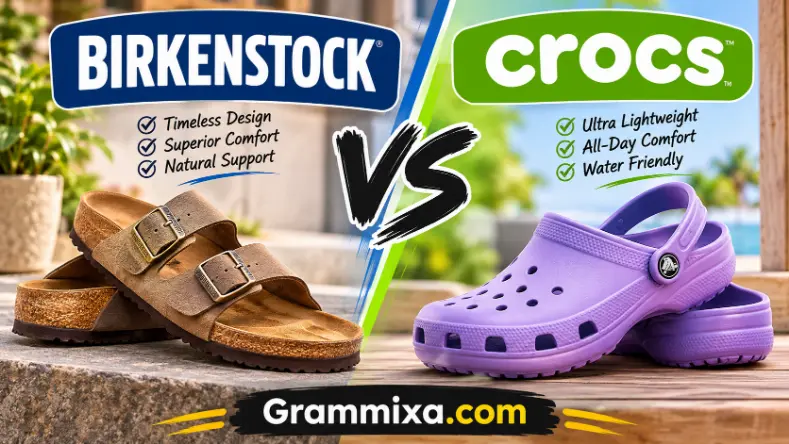
Choosing between Birkenstock vs Crocs comes down to more than appearance. Both brands are popular for casual footwear, but they offer different approaches to comfort, support, and everyday wear. Birkenstock is known for its contoured footbeds and classic sandal designs, while Crocs is famous for its lightweight molded clogs and easygoing style.
Whether you need shoes for running errands, travelling, relaxing at home, or spending long hours on your feet, understanding these differences can help you make a better choice.
Birkenstock sandals often appeal to people who prefer structured footbeds and timeless designs. Crocs, on the other hand, attract shoppers who value lightweight footwear, easy cleaning, and practical convenience.
However, comfort depends on the specific model, your foot shape, and how you plan to use your shoes. Neither brand is automatically the best option for everyone.
In this Birkenstock vs Crocs comparison, we will explore comfort, arch support, durability, materials, pricing, style, and everyday practicality. We will also look at which brand may suit different activities, from casual outings to holidays and long days on your feet. By the end, you will have a clearer idea of which footwear deserves a place in your wardrobe and offers the best value for your needs.
Birkenstock and Crocs offer different approaches to everyday comfort. Birkenstock is known for its contoured footbed, structured support, and classic sandal designs. Crocs focuses on lightweight, cushioned footwear made primarily with its proprietary Croslite material. Birkenstock may suit people who prefer a shaped footbed, while Crocs often works well for casual wear, easy cleaning, and wet environments.
Birkenstock vs Crocs: Quick Answer
If you are comparing Birkenstock vs Crocs, the best choice depends on how you plan to wear them. Both brands make popular casual footwear, but they differ in materials, construction, fit, and the kind of comfort they provide.
Birkenstock is best known for its supportive footbed design. Many of its classic sandals feature a shaped footbed with a defined heel cup, arch contour, and toe-grip area. These features create a more structured feel underfoot.
Crocs is known for lightweight clogs and other casual footwear made with Croslite, a proprietary closed-cell resin material. Its classic clog design provides a roomy fit, easy cleaning, and ventilation openings.
Here is a quick comparison.
| Feature | Birkenstock | Crocs |
|---|---|---|
| Main strength | Contoured footbed design | Lightweight, cushioned construction |
| Underfoot feel | Structured and supportive | Soft, springy, and lightweight |
| Common styles | Sandals, clogs, slides | Clogs, sandals, slides |
| Footbed design | Defined contours in classic models | Generally less anatomically contoured in classic clogs |
| Water use | Depends on the model and materials | Many classic styles are easy to clean and suitable for wet conditions |
| Maintenance | Depends on footbed and upper materials | Usually simple to rinse and clean |
| Style | Minimalist, natural, casual | Casual, colorful, practical |
| Best suited to | People who prefer a shaped footbed | People who value easy-care, lightweight footwear |
The biggest difference is straightforward: Birkenstock emphasizes a contoured footbed, while Crocs emphasizes lightweight convenience and cushioning. Neither brand is automatically more comfortable for everyone.
What Makes Birkenstock Different From Crocs?
The main difference between these brands comes down to how their footwear is designed to feel and function.
Birkenstock’s Contoured Footbed
Birkenstock’s classic footbed is designed around the shape of the foot rather than a uniformly flat surface. Depending on the model, it includes a shaped arch area, a deep heel cup, and a toe-grip section.
Many classic Birkenstock sandals use a footbed made with cork and latex, often finished with a suede lining. The materials and construction can create a firm, structured feel that becomes more familiar as you wear the shoes.
Birkenstock also sells different footbed constructions and upper materials, so not every model feels the same. Some styles are softer or use different materials from the traditional cork-latex design.
What this means for you: If you prefer footwear that feels shaped around your foot, a classic Birkenstock may be worth trying. However, the contours may feel unusual at first, particularly if you normally wear flat, flexible footwear.
Crocs’ Lightweight Croslite Construction
Crocs became widely known for its Classic Clog, which uses Croslite, a proprietary closed-cell resin material. This construction gives the footwear its characteristic lightweight feel and cushioning.
Classic Crocs clogs also have ventilation openings and a pivoting heel strap. You can wear the strap behind your heel for a more secure fit or move it forward for a slide-like feel.
Crocs offers other designs with different materials and construction, so the experience depends on the specific product.
What this means for you: If you want footwear that is easy to slip on, simple to clean, and convenient for everyday tasks, classic Crocs may be the more practical option.
Which Design Feels Better?
There is no universal winner.
Birkenstock’s structured footbed may appeal to people who like a more defined shape beneath their feet. Crocs may appeal to people who prefer a lighter, more cushioned feel.
Your foot shape, walking habits, and sensitivity to pressure points matter just as much as the brand name.
Birkenstock vs Crocs for Comfort
Comfort is one of the most important reasons people compare these brands. However, comfort is not simply about which shoe feels softer when you first put it on.
It also depends on fit, pressure distribution, cushioning, stability, and how long you wear the footwear.
Which Is More Comfortable for Everyday Wear?
Crocs often feels comfortable immediately because of its lightweight construction and cushioning. For quick errands, household tasks, and casual outings, that easygoing feel can be appealing.
Birkenstock may take more adjustment if you are unfamiliar with its shaped footbed. The firmer surface and pronounced contours can feel different from conventional foam footwear.
Once you find the right size and shape, either brand may work well for your routine.
Consider these differences:
- Choose Birkenstock if you like a structured footbed and defined contours beneath your feet.
- Choose Crocs if you prefer lightweight footwear with a cushioned feel.
- Try both if you spend several hours on your feet and are unsure which design suits you.
Do not assume that a softer shoe is always more comfortable over a full day. A shoe that feels pleasant for five minutes may feel different after several hours.
Which Is Better for Standing All Day?
The answer depends on your feet, workplace, and the exact model.
Birkenstock’s contoured footbed may suit people who prefer a defined support structure. Crocs’ lightweight cushioning may feel more comfortable to people who dislike firm footbeds.
However, neither brand guarantees less foot fatigue for every wearer. Fit, the floor you stand on, your body mechanics, and your activity level can all affect comfort.
If you work long shifts, look for footwear that fits securely and does not create pressure around your toes, heel, or arch. If your job requires protective footwear, choose a model that meets the relevant workplace requirements rather than relying on a casual clog or sandal.
Do Birkenstocks Need Breaking In?
Some Birkenstock models, especially classic cork-latex sandals, can feel firm when new. The footbed may become more familiar with wear, but the adjustment experience varies by person and model.
Start with shorter periods of wear and increase the duration only if the footwear feels comfortable. You should not have to tolerate significant pain, persistent rubbing, or numbness to make a pair work.
Crocs generally does not have the same cork-footbed adjustment process, although fit and rubbing can still be issues with any shoe.
Birkenstock vs Crocs for Arch Support
Arch support is a major reason shoppers consider Birkenstock. Yet the right choice depends on what kind of support your feet need.
Does Birkenstock Have Better Arch Support?
Classic Birkenstock footbeds feature a defined arch contour. This is a central part of the brand’s design and distinguishes its traditional sandals from many simple, flat slides.
People who prefer a shaped footbed may find this design comfortable. Others may find the arch contour too pronounced or uncomfortable, especially when the fit is incorrect.
Crocs’ classic clog has a different underfoot design, emphasizing lightweight cushioning rather than the same pronounced footbed contours found in classic Birkenstock sandals.
That does not mean every Crocs model lacks support. Construction varies across the brand’s footwear range, and some models are designed for particular work or comfort needs.
Are Birkenstocks Good for Flat Feet?
Some people with flat feet find contoured footbeds comfortable, while others prefer a less pronounced arch shape. Flat feet vary considerably, so there is no single answer that applies to everyone.
The important question is whether the shoe supports your foot comfortably without causing pressure or pain.
If you have persistent foot pain, a diagnosed foot condition, or specific orthotic requirements, seek advice from a qualified healthcare professional about suitable footwear. Neither brand should be treated as a universal solution for foot problems.
Are Crocs Good for Arch Support?
Classic Crocs may feel comfortable because of their cushioning and roomy shape, but their support characteristics differ from those of classic Birkenstock footbeds.
If you specifically want pronounced arch contours, compare the actual footbed rather than assuming every model from either brand has the same design.
Bottom line: Birkenstock is the more obvious starting point if a defined, contoured footbed is your priority. Crocs may be a better fit if you prefer a lightweight, cushioned shoe without the same pronounced contours.
Birkenstock vs Crocs for Walking
Both brands can work for everyday walking, but the best option depends on distance, terrain, fit, and the type of footwear you choose.
Which Is Better for Long Walks?
Birkenstock may appeal to walkers who prefer a firm, contoured footbed and a sandal that feels structured beneath the foot. Its suitability for longer walks depends on the model, fit, and your personal comfort.
Crocs can be convenient for shorter walks, casual outings, and everyday errands because many styles are lightweight and easy to put on. However, a roomy clog that feels comfortable around the house may not provide the fit or stability you want for a long walk.
For extended walking, consider:
- How securely the footwear stays on your feet.
- Whether the heel and arch feel comfortable.
- Whether your toes have enough room.
- Whether the sole feels stable on the intended surface.
- Whether the footwear causes rubbing after prolonged use.
Neither brand is a substitute for properly fitted walking or athletic shoes when your activity requires more specialized performance.
Which Is Better for Travel?
For travel, Crocs can be convenient for hotel rooms, casual sightseeing, and situations where easy cleaning matters.
Birkenstock may be preferable if you want sandals that pair easily with casual outfits and provide a more structured underfoot feel.
If you plan to walk several miles each day, test your chosen pair before travelling. Do not assume a new pair will be comfortable enough for a full day of sightseeing.
Birkenstock vs Crocs for Water and Outdoor Use
Water resistance is an important difference between these brands, particularly if you want footwear for beaches, pools, gardens, or rainy conditions.
Are Crocs Better for Wet Conditions?
Classic Crocs clogs are made with a lightweight, water-friendly material and are generally easy to rinse clean. Their ventilation openings allow water to drain, although the openings also let water and debris enter.
They can be useful for poolside wear, gardening, and other casual activities where footwear may get wet.
However, easy cleaning does not automatically mean reliable traction on every wet surface. Slippery floors and uneven outdoor terrain still require caution.
Can Birkenstocks Get Wet?
It depends on the model and its materials.
Traditional cork-latex footbeds and suede components require more care than footwear designed specifically for wet conditions. Excessive moisture can damage or affect certain materials, and prolonged exposure to heat can also cause problems.
Birkenstock offers models made with water-friendly materials, including EVA footwear. These options are more suitable for situations where conventional cork and suede sandals would be inconvenient.
If you expect frequent contact with water, check the care instructions for the exact model before purchasing.
Which Is Better for the Beach or Pool?
For many casual beach and poolside situations, a water-friendly Crocs model or a Birkenstock EVA model is more practical than a traditional cork-and-suede sandal.
The choice comes down to fit, design, traction, and how easily you can clean the footwear afterward.
Birkenstock vs Crocs: Durability and Maintenance
Durability depends on how often you wear your footwear, how you use it, and how well you maintain it.
Which Brand Lasts Longer?
It is difficult to declare one brand universally more durable because the materials and construction differ across models.
Traditional Birkenstock sandals use components that can require specific care. Some models may be repairable, depending on their construction and the available repair service.
Crocs’ classic clogs are relatively simple to clean, but they can still wear out, become damaged, or lose their original fit over time.
Factors that affect the lifespan of either brand include:
- Frequency of use.
- Exposure to water, sunlight, and heat.
- Walking surfaces and activity type.
- Fit and the amount of friction.
- Cleaning and storage habits.
If long-term value matters, consider the cost of replacement, repair options, and how well the footwear suits your daily routine.
How Do You Clean Birkenstocks?
Cleaning methods depend on the upper and footbed materials. For classic cork-latex styles, avoid soaking the footwear or exposing it to excessive heat.
Follow the manufacturer’s care guidance for the particular model. Use appropriate cleaning products and allow the footwear to dry naturally when required.
How Do You Clean Crocs?
Classic Crocs can generally be cleaned with water and mild soap. Rinse away dirt and let them air-dry.
Avoid excessive heat, including hot cars and direct high-temperature drying, because heat can affect the shape and fit of the material.
Birkenstock vs Crocs: Style and Everyday Fashion
Comfort is important, but appearance also influences which pair you reach for every day.
Which Looks More Stylish?
Style is subjective, but the two brands have distinct visual identities.
Birkenstock is associated with minimalist sandals, recognizable straps, neutral colors, and natural-looking materials. Popular designs such as the Arizona and Boston can work with jeans, linen trousers, relaxed dresses, and other casual outfits.
Crocs has a more playful and practical appearance. Classic clogs come in a range of colors, and compatible decorative charms allow wearers to personalize certain styles.
Neither design is inherently better. Birkenstock may suit someone who wants understated casual footwear, while Crocs may appeal to someone who values color, individuality, and convenience.
Which Is Better for Everyday Outfits?
Choose Birkenstock if you want a versatile sandal or clog that works with relaxed everyday clothing.
Choose Crocs if you prefer a casual clog that is easy to wear around the house, in the garden, or on quick trips outside.
Both brands offer multiple designs, so compare specific models rather than assuming every shoe from the same brand has the same appearance or versatility.
Birkenstock vs Crocs: Price and Value
Price is another important consideration, but the best value is not necessarily the lowest upfront cost.
Birkenstock’s traditional footbed construction, materials, and design position many models as a longer-term footwear purchase. Crocs’ classic clogs are often chosen for their practicality and relatively simple construction.
Actual prices vary by model, material, retailer, region, and current promotions. Without comparing specific models and current local prices, it would be misleading to declare one brand consistently cheaper.
Consider the following when comparing value:
- Initial cost: How much does the exact pair cost?
- Frequency of use: Will you wear it daily or occasionally?
- Maintenance: Does the material require special care?
- Repairability: Are repair services available for your model?
- Versatility: Can you use it for several activities?
- Fit: Will you comfortably wear it for the situations you have in mind?
A cheaper pair offers little value if it causes discomfort or does not suit your needs. Likewise, a more expensive pair may not be worthwhile if you only need simple footwear for occasional errands.
How to Choose the Right Size and Fit
Sizing can make or break the experience with either brand. Do not choose solely by your usual shoe size, because fit varies by model and footwear construction.
What to Know About Birkenstock Sizing
Birkenstock offers different width options in many models, and its footbeds are designed with specific contours. Your heel should sit appropriately within the heel cup, while your toes should have enough space without being forced against the front edge.
Check the sizing guidance for the particular style you are considering. A sandal that feels too tight around the toes or puts uncomfortable pressure on your arch may not be the right fit.
What to Know About Crocs Sizing
Crocs classic clogs are known for their roomy shape. Depending on the model, the fit may feel looser than a conventional sneaker or sandal.
Make sure the shoe does not slip excessively when you walk. If the heel strap is part of the design, test both strap positions and choose the one that provides the comfort and security you need.
Should You Buy Birkenstock or Crocs Online?
Online shopping can be convenient, but check the model-specific size chart and return policy before ordering.
If possible, try the footwear on indoors and walk around briefly before removing tags or wearing it outside. This gives you a better chance of identifying fit problems while the item remains eligible for return.
Common Mistakes When Comparing Birkenstock and Crocs
A useful comparison should look beyond brand reputation and appearance.
Assuming Softer Always Means Better
Soft cushioning can feel pleasant immediately, but comfort over several hours also depends on fit, stability, and how pressure is distributed.
Assuming Arch Support Is Always Necessary in the Same Form
Different feet respond differently to footwear. A pronounced arch contour may feel comfortable to one person and irritating to another.
Treating Every Model as Identical
Both brands sell different styles and materials. A classic Birkenstock sandal is not identical to a water-friendly EVA model, and a classic Crocs clog may feel different from another Crocs design.
Ignoring the Intended Activity
Footwear for quick errands has different requirements from footwear for long hikes, demanding workplaces, or athletic activity.
Choose based on how you intend to use the pair, rather than buying solely because one brand is popular.
FAQs:
Are Birkenstocks Better Than Crocs?
Neither brand is better for everyone. Birkenstock is a strong option for people who prefer a contoured footbed, while Crocs is appealing for lightweight cushioning, easy cleaning, and casual convenience. Your foot shape, activity, and comfort preferences determine which is better for you.
Are Crocs More Comfortable Than Birkenstocks?
Crocs may feel softer and lighter straight away, while Birkenstock’s classic footbed generally feels firmer and more structured. Some people prefer the cushioning of Crocs, and others prefer the defined contours of Birkenstock. The most comfortable option depends on your fit and personal preferences.
Which Is Better for Standing All Day, Birkenstock or Crocs?
Both can suit some people’s routines, but neither is universally best for standing all day. Birkenstock offers pronounced footbed contours in its classic designs, while Crocs offers lightweight cushioning. For long shifts, prioritize secure fit, comfort, traction, and any footwear requirements imposed by your workplace.
Which Is Better for Walking Long Distances?
The answer depends on the model and your feet. Some people prefer Birkenstock’s structured footbed, while others find Crocs more comfortable for shorter everyday walks. For long-distance walking, test the fit carefully and consider dedicated walking shoes when you need additional stability or performance.
Can You Wear Birkenstocks or Crocs in the Rain?
Water-friendly Crocs models and Birkenstock EVA footwear are generally more suitable for wet conditions than traditional Birkenstock cork-and-suede styles. Check the care instructions and traction characteristics of your chosen model, particularly if you expect to walk on slippery surfaces.
Which Is Better Value for Money?
Value depends on the price of the specific model, its lifespan, maintenance needs, repair options, and how frequently you use it. Crocs may appeal to shoppers looking for practical casual footwear, while Birkenstock may appeal to those seeking a structured footbed and a particular style. Compare actual models rather than relying on brand-wide assumptions.
Cocclusion:
The choice between Birkenstock and Crocs comes down to what you want from your footwear.
Choose Birkenstock if you prefer a structured footbed, defined contours, and a minimalist sandal or clog style. Choose Crocs if you prioritize lightweight cushioning, convenient cleaning, and casual everyday use.
If you are still undecided, try both brands in the specific styles you plan to wear. Walk around in each pair, pay attention to pressure points, and consider the activities you do most often.
The best choice is the pair that fits your feet, feels comfortable throughout your intended activity, and meets your practical needs.
