
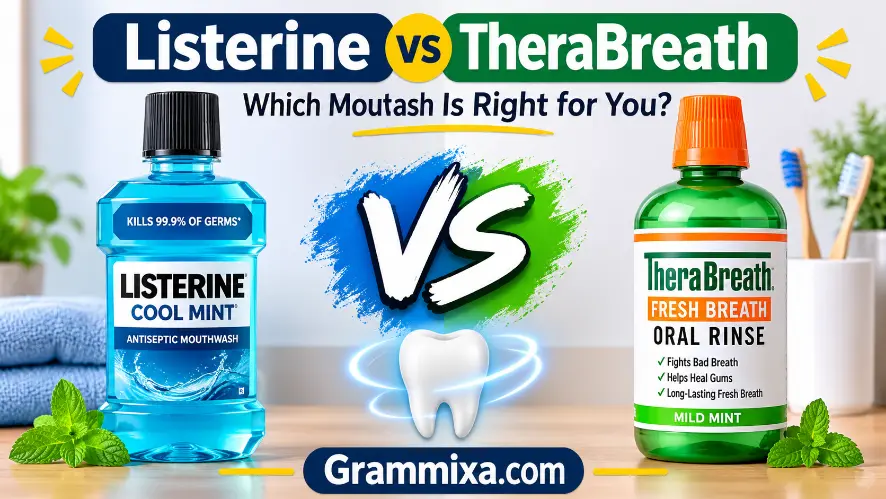
Choosing between Listerine vs TheraBreath can be confusing when both mouthwash brands promise fresher breath and better oral hygiene. However, they take different approaches to mouthwash, with product formulas, active ingredients, flavours, and intended benefits varying across their ranges. Whether you want to tackle persistent bad breath, support your daily oral care routine, or find a mouthwash that feels comfortable to use, understanding these differences can help you make a better choice.
Listerine is widely recognised for its distinctive flavours and antiseptic mouthwashes, with certain formulations containing essential oils designed to help reduce oral bacteria. TheraBreath, meanwhile, is particularly known for products marketed to help manage bad breath, including formulations that use different approaches to breath freshness. Neither brand is automatically the better option for everyone, as your needs, taste preferences, and sensitivity to certain ingredients can influence your experience.
In this guide, we will compare Listerine vs TheraBreath across important factors, including ingredients, bad breath control, alcohol content, taste, sensitivity, and value for money. We will also explore which features to look for when choosing a formula for your daily routine. By the end, you will have a clearer understanding of how these mouthwashes differ and which option may better suit your oral care needs.
Listerine and TheraBreath serve different oral care needs. Listerine Original Antiseptic helps prevent and reduce plaque and gingivitis, while TheraBreath Fresh Breath Oral Rinse focuses on controlling bad breath with an alcohol-free formula. The better choice depends on your oral health goals, sensitivity to mouthwash ingredients, and whether you need additional cavity protection from fluoride.
Quick Answer:
Listerine and TheraBreath are both mouthwash brands, but their formulas and intended benefits differ.
- Choose Listerine Original Antiseptic if your priority is helping control plaque, gingivitis, and odor-causing germs with an essential-oil-based antiseptic rinse.
- Choose TheraBreath Fresh Breath Oral Rinse if you want an alcohol-free option designed to fight bad breath without the intense burning sensation associated with some mouthwashes.
- Consider a fluoride mouthwash from either brand if you need additional cavity protection and the specific product is appropriate for your needs.
Neither brand is automatically better for everyone. Listerine offers alcohol-free products, too, and TheraBreath sells more than one type of oral rinse. Comparing the exact formulas is more useful than choosing by brand name alone.
What Is the Difference Between Listerine and TheraBreath?
The main difference is the formulation and the oral health benefit each product emphasizes. Traditional Listerine antiseptic mouthwash uses four active ingredients, while TheraBreath Fresh Breath uses a different approach focused on bad breath and a gentler rinsing experience.
| Feature | Listerine Original Antiseptic | TheraBreath Fresh Breath |
|---|---|---|
| Main purpose | Helps prevent and reduce plaque and gingivitis | Helps control bad breath |
| Alcohol | Contains alcohol | Alcohol-free |
| Active ingredients | Eucalyptol, menthol, methyl salicylate, thymol | Sodium chlorite in the commonly sold Fresh Breath formula |
| Mouthfeel | Often has a strong, intense sensation | Generally designed to feel milder |
| Cavity protection | Depends on the specific product | Depends on the specific product |
| Best suited for | People prioritizing antiseptic plaque and gum care | People prioritizing breath freshness without alcohol |
These comparisons refer to Listerine Original Antiseptic and TheraBreath Fresh Breath Oral Rinse, not every product sold under either brand. Ingredient lists and formulations can vary by product and market.
Which Brand Is Better for Bad Breath?
Both can help manage bad breath, but the underlying cause matters.
TheraBreath Fresh Breath is specifically marketed for breath odor control and uses an alcohol-free formula. Listerine Original Antiseptic also helps reduce odor-causing germs while targeting plaque and gingivitis.
If your main concern is persistent bad breath, consider whether the cause could be dry mouth, gum disease, tooth decay, food trapped between teeth, or a coated tongue. Mouthwash may help with symptoms, but it will not necessarily resolve the underlying problem.
Which Brand Is Better for Gum Health?
Listerine Original Antiseptic has a clear advantage when comparing the products specifically for plaque and gingivitis claims. Its active ingredients are intended to help prevent and reduce these problems.
However, TheraBreath also offers products formulated for other oral care goals. Its Fresh Breath formula should not be treated as interchangeable with a mouthwash specifically formulated for gum health.
Neither product replaces brushing twice daily, cleaning between teeth, and professional dental care.
Listerine: Benefits, Ingredients and Drawbacks
Listerine is a long-established oral care brand with several mouthwash formulas. Its product range includes antiseptic rinses, alcohol-free options, fluoride rinses, and specialized products for particular oral care needs.
Key Ingredients in Listerine Original Antiseptic
The US formulation of Listerine Original Antiseptic contains four active ingredients:
- Eucalyptol: An ingredient derived from eucalyptus-related sources.
- Menthol: Provides a cooling sensation and contributes to the formula’s flavor.
- Methyl salicylate: An ingredient associated with wintergreen flavoring.
- Thymol: An ingredient associated with thyme and used in the antiseptic formula.
Together, these ingredients help control germs associated with plaque, gingivitis, and bad breath. The formula also contains alcohol, which helps dissolve and distribute its ingredients.
Other Listerine products may use different active ingredients or omit alcohol entirely, so check the Drug Facts label before purchasing.
Benefits of Listerine
Helps control plaque and gingivitis: Listerine Original Antiseptic is formulated to help prevent and reduce plaque and gingivitis when used as directed.
Provides broad oral hygiene support: Its antiseptic formula targets germs associated with common oral health concerns.
Offers several product options: People who dislike traditional antiseptic mouthwash can explore alcohol-free or fluoride-containing alternatives within the range.
Fits into a daily oral care routine: A suitable mouthwash can complement regular brushing and flossing rather than replace either one.
Potential Drawbacks of Listerine
The original formula can feel intense. Its flavor and alcohol content may be uncomfortable for people who prefer a mild rinse.
Alcohol-free does not mean unavailable. Some shoppers assume every Listerine product contains alcohol, but the brand offers alcohol-free formulas.
Not every version provides the same benefits. A breath-freshening rinse, an antiseptic rinse, and a fluoride rinse may serve different purposes.
It can irritate some mouths. If you experience burning, soreness, or unusual irritation, stop using the product and seek advice from a dentist if symptoms persist.
Who Should Consider Listerine?
Listerine Original Antiseptic may suit adults who want an additional measure of plaque and gingivitis control and can comfortably tolerate its formula.
If you have a sensitive mouth, prefer alcohol-free products, or need extra fluoride, compare other Listerine formulas before deciding. Your dentist can help you choose an appropriate rinse if you have an existing oral health concern.
TheraBreath: Benefits, Ingredients and Drawbacks
TheraBreath focuses on several oral care needs, including bad breath, cavity prevention, and gum care. Its Fresh Breath Oral Rinse is particularly relevant to shoppers looking for an alcohol-free mouthwash.
Key Ingredients in TheraBreath Fresh Breath
The commonly sold TheraBreath Fresh Breath Oral Rinse uses sodium chlorite as part of its odor-control approach. Its formula also includes ingredients that support the product’s texture, flavor, and stability.
Depending on the particular version, the ingredient list may include:
- Sodium chlorite: Used in the Fresh Breath formula for breath odor control.
- Sodium bicarbonate: Helps support the formula’s chemical environment.
- Glycerin: Helps retain moisture and contributes to the mouthwash’s feel.
- Flavoring ingredients: Give the rinse its characteristic taste.
Ingredient lists differ among TheraBreath products. Its anticavity formulas, for instance, may contain sodium fluoride instead of relying on the same active ingredient combination as its Fresh Breath rinse.
Benefits of TheraBreath
Alcohol-free formulation: The Fresh Breath rinse is designed for people who prefer to avoid alcohol in mouthwash.
Focus on bad breath: Its principal purpose is controlling breath odor rather than making every version a comprehensive gum treatment.
Milder rinsing experience: Many people choose it because they prefer a rinse without the strong burning sensation of traditional alcohol-containing mouthwash. Individual experiences still vary.
Multiple oral care options: The brand offers formulas for different needs, so shoppers can look beyond its signature Fresh Breath product.
Potential Drawbacks of TheraBreath
Not every formula targets plaque and gingivitis in the same way. Check the product label if gum health is your primary concern.
Breath improvement may be temporary. Persistent odor caused by dental disease, dry mouth, or another underlying condition may require treatment beyond mouthwash.
Product instructions vary. Rinsing time, age recommendations, and directions for use may differ among formulas.
Alcohol-free does not automatically mean better for every purpose. Someone who needs a particular therapeutic benefit should choose a product based on its active ingredients and intended use, not just the absence of alcohol.
Who Should Consider TheraBreath?
TheraBreath Fresh Breath may suit people whose main concern is bad breath and who prefer an alcohol-free rinse.
It may also appeal to those who find strong minty or alcohol-containing mouthwashes uncomfortable. However, people with persistent bad breath, gum bleeding, tooth pain, or other ongoing symptoms should consult a dental professional rather than relying on mouthwash alone.
Listerine vs TheraBreath for Different Oral Care Needs
The right mouthwash depends on the problem you want to address. A product that freshens breath may not provide the same benefits as a rinse formulated for gum health or cavity prevention.
Best for Bad Breath
Both brands are reasonable options, but TheraBreath Fresh Breath is a natural starting point for people who want an alcohol-free breath rinse.
Listerine Original Antiseptic also targets germs associated with bad breath. If you prefer its stronger flavor and want additional plaque and gingivitis benefits, it may be worth considering.
For persistent odor, pay attention to tongue cleaning, hydration, brushing, and cleaning between teeth. These habits often matter more than switching between brands.
Best for Plaque and Gingivitis
Listerine Original Antiseptic is the more direct choice of these two specific products because its labeled uses include helping prevent and reduce plaque and gingivitis.
TheraBreath offers other products for gum care, but its Fresh Breath rinse should not automatically be considered equivalent to a product specifically labeled for gingivitis.
If your gums bleed regularly, feel swollen, or appear to be receding, arrange a dental examination.
Best for Sensitive Mouths
TheraBreath Fresh Breath may be preferable if you dislike the burning sensation associated with alcohol-containing mouthwash.
However, alcohol is not the only ingredient that can cause irritation. Flavorings and other ingredients may also bother sensitive users.
An alcohol-free Listerine formula may be another option. Compare the complete ingredient lists, and discontinue any rinse that consistently causes discomfort.
Best for Cavity Prevention
Neither brand name alone tells you whether a mouthwash will help prevent cavities. You need to check whether the exact product contains fluoride and is labeled for anticavity use.
TheraBreath Complete Oral Rinse, for example, contains sodium fluoride as its active anticavity ingredient. Listerine also sells fluoride-containing mouthwashes.
Fluoride helps strengthen tooth enamel and prevent decay. If you are at increased risk of cavities, ask your dentist whether a fluoride rinse would be useful alongside fluoride toothpaste.
Best for Everyday Use
Either brand can fit into an oral hygiene routine when you select a product suited to your needs and follow its directions.
For everyday use, consider these questions:
- Do you mainly want fresher breath or additional plaque control?
- Do you prefer an alcohol-free formula?
- Do you need extra fluoride for cavity prevention?
- Does your dentist recommend a particular therapeutic ingredient?
- Can you use the product comfortably and consistently?
Answering these questions will help you make a more useful choice than relying on brand popularity alone.
Alcohol-Free vs Alcohol-Based Mouthwash
Alcohol content is one of the most noticeable differences between Listerine Original Antiseptic and TheraBreath Fresh Breath.
Traditional Listerine Original Antiseptic contains alcohol, while TheraBreath Fresh Breath is formulated without it. Both brands offer or have offered different formulations, so the exact label matters.
Does Alcohol Make Mouthwash More Effective?
Not necessarily for every oral health goal.
Alcohol can serve as a solvent in mouthwash formulations, helping dissolve certain ingredients. However, effectiveness depends on the complete formula, its active ingredients, and the condition being treated.
An alcohol-free mouthwash can still provide useful benefits when it contains appropriate active ingredients.
Is Alcohol-Free Mouthwash Better for Dry Mouth?
An alcohol-free product may be more comfortable for someone experiencing dry mouth, especially if alcohol-containing rinses worsen their discomfort.
However, not all alcohol-free mouthwashes are specifically designed to relieve dry mouth. Look for a product labeled for that purpose if dryness is your main concern.
Dry mouth can have several causes, including medications and underlying health conditions. If it persists, consult a healthcare professional or dentist.
Can You Use Mouthwash Every Day?
Many mouthwashes are intended for regular use, but you should follow the directions on the specific bottle.
Do not assume that using more mouthwash or rinsing more frequently will improve results. Excessive or inappropriate use can cause irritation, and some therapeutic rinses have specific restrictions.
Children also need age-appropriate products and supervision. Follow the label’s age guidance and ask a dentist if you are unsure which rinse is suitable.
Common Mistakes When Comparing Listerine and TheraBreath
Choosing a mouthwash becomes easier when you avoid a few common misconceptions.
Assuming All Listerine Products Contain Alcohol
Listerine Original Antiseptic contains alcohol, but the brand offers alcohol-free alternatives. Always check the specific product name and ingredient list.
Assuming TheraBreath Only Freshens Breath
TheraBreath has several types of oral rinse. Some focus on breath odor, while others address needs such as cavity prevention or gum care.
The benefits depend on the formulation, not simply the brand.
Treating Fresh Breath as Proof of Healthy Gums
A mouthwash can temporarily improve breath without addressing gingivitis, tooth decay, or other dental problems.
Healthy gums require consistent oral hygiene and appropriate dental care. Persistent bad breath or bleeding gums should not be ignored.
Replacing Brushing and Flossing With Mouthwash
Mouthwash is an addition to oral hygiene, not a replacement for removing plaque with a toothbrush and cleaning between teeth.
A rinse cannot reliably remove all the plaque and debris that brushing and interdental cleaning address.
Ignoring Active Ingredients
A product’s front label may emphasize fresh breath, whitening, gum health, or total care. Check the active ingredients and labeled uses to understand what the product is designed to do.
This is especially important when choosing fluoride products or rinses intended to help manage gingivitis.
FAQs:
Is Listerine or TheraBreath better overall?
Neither is universally better. Listerine Original Antiseptic is a strong option for helping prevent and reduce plaque and gingivitis, while TheraBreath Fresh Breath is designed for bad breath control with an alcohol-free formula. Your priorities and the exact product matter most.
Does TheraBreath work better than Listerine for bad breath?
TheraBreath Fresh Breath is specifically formulated for breath odor control and may suit people who prefer alcohol-free mouthwash. Listerine also helps control germs associated with bad breath. Results depend on the product, the cause of the odor, and how consistently you maintain oral hygiene.
Is Listerine stronger than TheraBreath?
Listerine Original Antiseptic often feels stronger because of its intense flavor and alcohol-containing formula. However, a stronger burning sensation does not automatically mean better results. Compare the active ingredients and labeled benefits instead of judging effectiveness by how intense a rinse feels.
Can I use Listerine or TheraBreath if I have sensitive gums?
An alcohol-free formula may be more comfortable if your mouth is sensitive. TheraBreath Fresh Breath and certain Listerine products may be options, depending on your individual tolerance. If you experience persistent irritation, pain, or bleeding, stop using the irritating product and consult a dentist.
Which brand is better for preventing cavities?
The better choice is a product specifically formulated with fluoride for cavity prevention. Both brands offer fluoride-containing options, but not every mouthwash from either brand contains fluoride. Check the active ingredients and follow the product directions.
Should I use mouthwash before or after brushing?
Follow the instructions on your chosen mouthwash and toothpaste. Using mouthwash immediately after brushing may wash away concentrated fluoride left by toothpaste, depending on the products involved. If cavity prevention is a priority, ask your dentist about the best timing for your particular routine.
Conclusion:
The choice between Listerine and TheraBreath comes down to your oral health goals rather than which brand sounds more powerful.
Choose Listerine Original Antiseptic if you want a rinse formulated to help prevent and reduce plaque and gingivitis and you are comfortable with its stronger taste.
Choose TheraBreath Fresh Breath if your main concern is bad breath and you prefer an alcohol-free mouthwash.
If you want extra cavity protection, compare fluoride-containing products from both brands. If you have dry mouth, persistent bad breath, bleeding gums, or recurring oral irritation, look beyond a simple brand comparison and seek professional dental advice.
Ultimately, the best mouthwash is one that addresses your specific needs, feels comfortable to use, and complements regular brushing, cleaning between teeth, and routine dental care.
